
Selfish
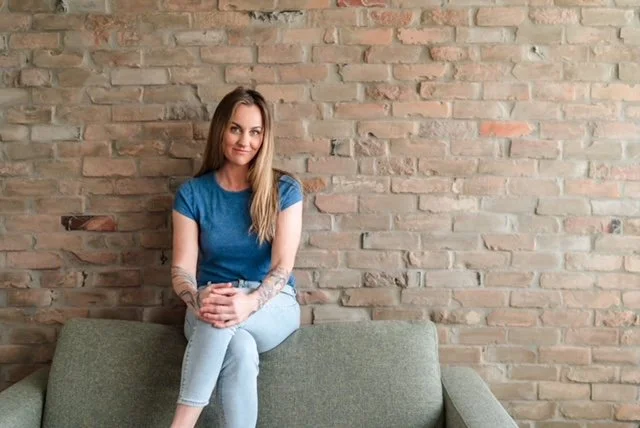
I ended my marriage, and some have called me selfish.
Perhaps they’re right. Perhaps I am.
But before you decide, let me tell you a story.
On February 11, 2012, my mother’s body was found frozen in fetal position on the front steps of the house where I grew up. Ontario was locked in a brutal cold snap that morning. We still don’t know the exact details, but the long and the short of it is this: alcoholism took my mother’s life.
What almost no one knows is that across the country, at nearly the same hour, something was happening inside me. I went to bed in another province around midnight—roughly the time she was passing. My arms and legs began cramping, my body shaking with a strange, visceral pain. I curled myself into a fetal position, trying to shake off what felt like an invisible weight.
Years of therapy later, I would understand: a part of me knew my mother was dying. A part of me felt her leaving. And a part of me died with her on those steps.
It wasn’t only my mother’s death I felt. It was the unlived life of my mother, and the unlived life of her mother, and the unlived life of her mother’s mother. It was a whole ancestral line of pain echoing through my body.
When my daughter was born in 2016, a new kind of rage came roaring up. Not the garden-variety exhaustion of sleep deprivation and hormonal shifts—something deeper, older, heavier. That rage was the signal flare: there was more inside me than I could see.
So began a deep dive, after nearly seventeen years of therapy, into the bottomless well of what I was carrying: the childhood sexual abuse I had endured, the trauma embedded in my bones, the inherited pain of my mother and her mother before her.
For four years I sat with it all—the horror, the disgust, the filth, the cellular fear. And at my lowest point, the pain became so unendurable that I ended up in a psychiatric ward. I came terrifyingly close to ending my own life, or at the very least cutting my arms off, because the somatic pain in my arms was almost unbearable.
That was the bottom of the pit. The moment I knew I could not outrun my pain, fix my pain, or bargain with it. The moment I had to decide: would I die with the story, or stay and let it burn through me?
Hell was not some future punishment waiting for me; hell was inside my own body and mind. And I went there. Over and over. Until, somehow, I began to find a way out.
It didn’t happen all at once. It began as a flicker—tiny moments of light seeping in through the cracks: a walk outside where the air felt like mercy on my skin, a moment of real presence with my daughter, a word of truth in therapy that I could almost believe. Little by little, breath by breath, I began to stay. I began to live.
So yes, my selfishness included all of this: years of therapy, years of grief, years of burning in the fire of everything unresolved.
But here’s what I’ve come to see: as I kept healing, as I stayed with the pain instead of running from it, something remarkable happened. My relationship with myself transformed. My relationship with my daughter transformed.
So go ahead—call me selfish.
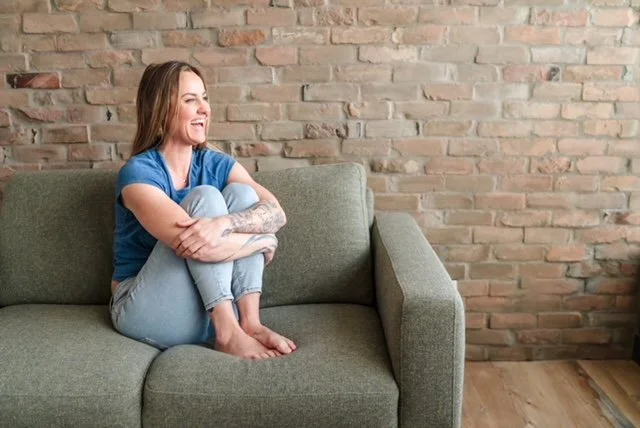
Selfish means my daughter gets to watch her mother heal from insecure attachment patterns that have been passed down through generations.
Selfish means she gets to witness her mother making embodied, grounded choices in love—choosing one day to marry not from fear or scarcity, but from fullness and freedom.
Selfish means she grows up seeing joy and peace instead of chaos, a nervous system that is calm and regulated instead of flooded with fear.
If selfish means that my daughter never has to carry the burdens, the traumas, or the pain that were never hers to begin with—then so be it.
If selfish means my daughter gets to stand beside me while I look in the mirror and witness a woman who meets her own reflection with pride, love, and reverence for her beauty—then I’ll take selfish.
Because the truth is: I never got to see that in my own mother. I never saw her stand tall in her worth, never watched her honor her own beauty, never witnessed her living a life unburdened by shame. And as a little girl, if I could have wished on a star—if there was one thing in the whole wide world I wanted more than anything—it would have been for my mom to be happy.
And in the hundreds of women I’ve sat across from over the years, if there’s one longing that echoes again and again, it’s this: I wish I could have seen my mother happy.
So yes, I will live my life large. I will live it in the sunshine, not only for my daughter and for myself, but for my mother, and for her mother, and for her mother before her.
Because selfish, for me, looks like being a stunning example to my daughter—of a woman, of a mother—fully alive. It looks like living my one wild and precious life unapologetically. It looks like taking the absolute best care of myself—mind, body and soul—biking through forests, swimming in waterfalls, and going for long walks by the lake.
It looks like chasing sunsets, stargazing, campfires, and late-night shenanigans with friends. It looks like park dates with my bare feet in the grass, slow mornings with a good cup of coffee, hammock hangs, belly-filled laughter, and dancing.
It looks like marrying the man of my dreams and building a relationship filled with peace, joy, ease, and play—including as much beautiful, messy, sacred, sexy sex as possible for the rest of my life.
It looks like going on adventures, meeting soul-filled new people, sitting around a table sharing food and stories, and asking for help with my daughter when I need it.
If that’s selfish, then I’ll wear the word across my forehead like a crown.
And I’ll give my daughter all the permission she’ll ever need to live fully alive—wild, joyous, and free—and to one day pass the same inheritance on to her own children, if she ever has them.